

Understanding your
immune system
Autoimmune disorders often stem from underlying imbalances in immune cells and dysfunction of regulatory T cells.
For Patients
At Nektar, we are dedicated to discovering novel therapies aimed at selectively targeting pathways within the immune system that play critical roles across a wide range of immune-based disorders and conditions.
Your immune system involves a multitude of cell types and pathways that work together in a delicate balance to keep you healthy. Some cells attack threats, while others calm the immune response. We are developing therapies designed to address immune system imbalances by using the body’s natural defense mechanisms.
By targeting specific immune pathways, we strive to create innovative treatments for immune-mediated diseases.
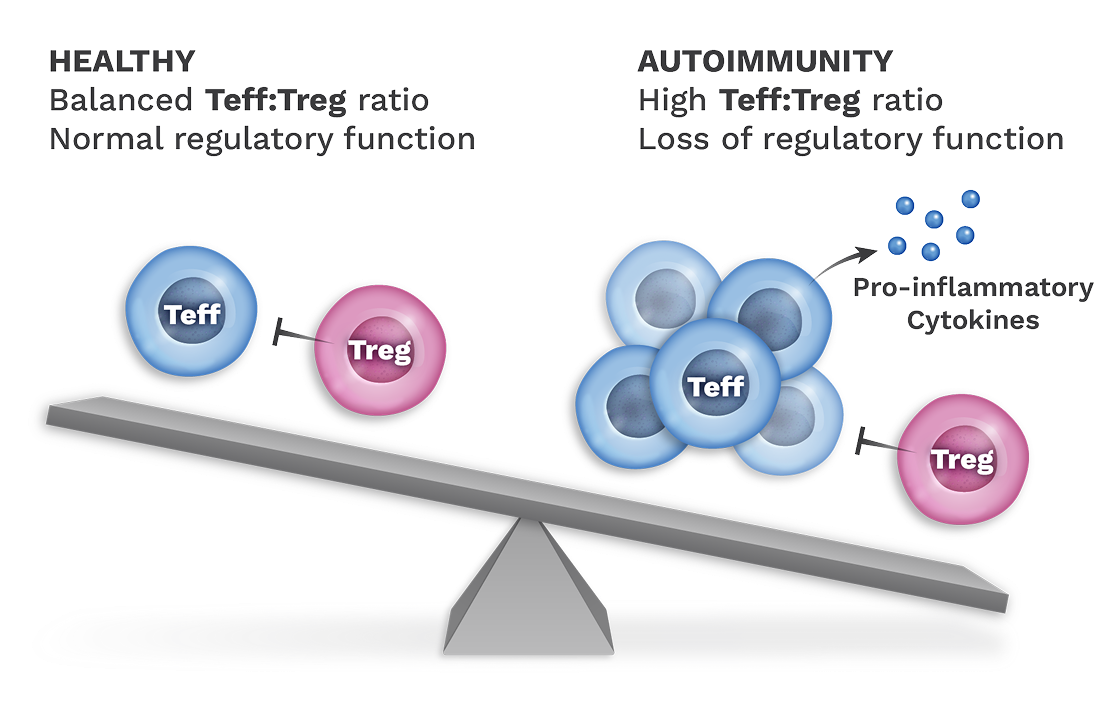

Understanding immune imbalances
Your immune system is your body’s natural defense, protecting against harmful invaders like bacteria and viruses. However, this intricate protective system can occasionally malfunction, mistakenly targeting healthy cells and leading to immune-mediated diseases. These conditions can be complex and are often caused by a combination of factors, including genetics, environmental triggers and imbalances in the immune system.
What can cause immune imbalances?
- Your immune system loses the ability to recognize your body’s own cells as “self”
- Antibodies, which are typically protective proteins, mistakenly target your body’s tissues
- Cytokines, the messenger proteins that regulate immune responses, become dysregulated and cause chronic inflammation
Autoimmune and inflammatory diseases are conditions that occur when your immune system fails to recognize your own cells as “self” and attacks them as if they were invaders or overreacts to cause chronic inflammation even when there is no threat.
The role of regulatory T cells
Regulatory T cells (Tregs) are the immune system’s peacekeepers. They are a special type of cell that ensures your immune system doesn’t overreact or attack the wrong things—like your own tissues. If your Tregs are too few or not working well, the immune system can become overactive or misdirected.
What do Tregs do?
- Prevent autoimmunity: By keeping the immune response in check, they reduce the risk of autoimmune diseases.
- Stop friendly fire: They help your body recognize what belongs to you, so your immune system doesn’t mistakenly attack your own cells.
- Prevent overactivation: They tell other immune cells to calm down when they are overstimulated.

Our Clinical Trials
To bring new therapies to patients, we carefully conduct studies called clinical trials to evaluate the safety and efficacy of our investigational medicines.
Contact your physician to learn if our trials are right for you.